Wittgenstein and family resemblance
Why categories work by overlap rather than definition, and how embeddings made that computational.
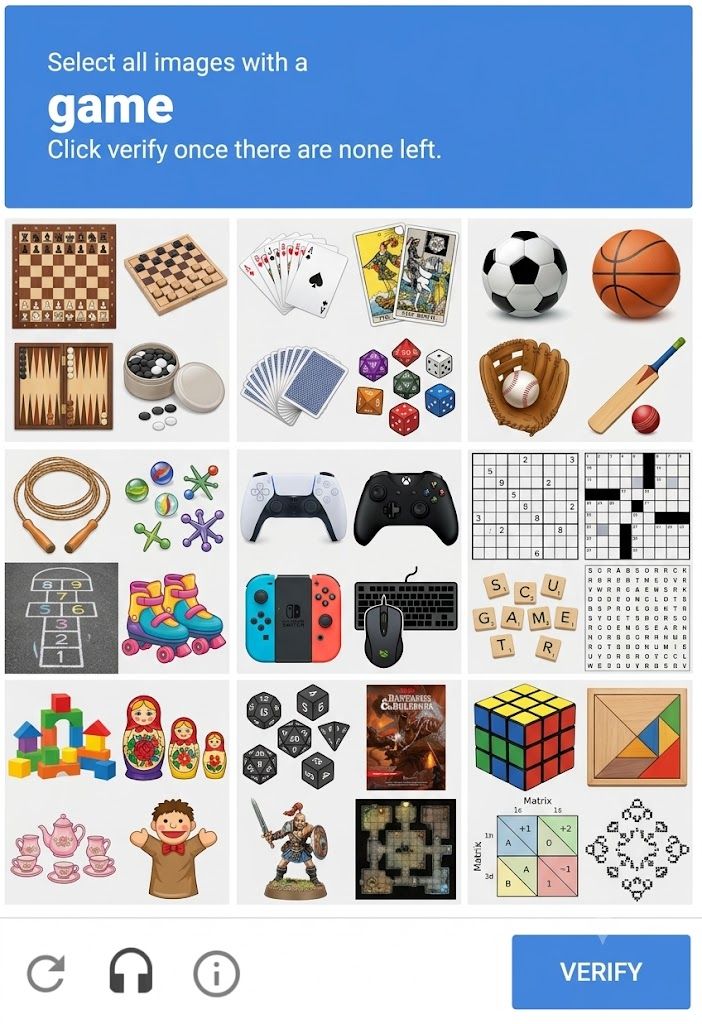
Define "game."
Board games, card games, ball games, video games, peekaboo. What do they share? Some are competitive, some are not. Some have rules, some are improvised. No single feature is shared by all of them.
Yet everyone knows what a game is.
This was Wittgenstein's challenge, in his 1953 book Philosophical Investigations. And his answer demolished two thousand years of philosophy. Categories work by family resemblance. Your eyes, your sister's nose, your brother's chin. Features overlap across a family without any single one shared by all.
Now let's apply this to real estate data. Not "multifamily." Yes it's vague, but also too broad. "Workforce Housing." Everyone uses the term, but it's definition is inconsistent and often view point driven.
The Urban Land Institute (ULI) says households earning 60 to 120 percent of area median income. The National Multifamily Housing Council (NMHC) tax-credit proposal says 100 percent and below. Brookings says 80 to 120, and calls the term imprecise and controversial. Others drop income entirely and define it by occupation: teachers, nurses, police. Same two words. No two parties draw the same line.
Billions get allocated against a category no one agrees how to define.
Most data dictionaries try the other way. Define the category. List its features. Validate every record. It never works. Edge cases multiply. The dictionary grows and the team trusts it less.
Modern AI does not categorize by definition. It does not sort things into boxes. It places them in a space where similar things sit close together and different things drift apart. Nobody writes the rule for what counts as similar. The model learns it from the patterns, and the closeness becomes the meaning.
That space is a set of embeddings. The position of each thing is a vector. Hundreds of dimensions, no definitions, just proximity. Wittgenstein's family resemblance is embeddings just three decades before the math existed to build them.
The rigid databases of the last fifty years are becoming legacy. We are returning to family resemblance, now made computational. That is the shape of the next decade of data infrastructure. Not better definitions. Better similarity.
Klaus, Aristotle, Wittgenstein. Three weeks of dead philosophers explaining your AI data strategy.
First posted on LinkedIn.